
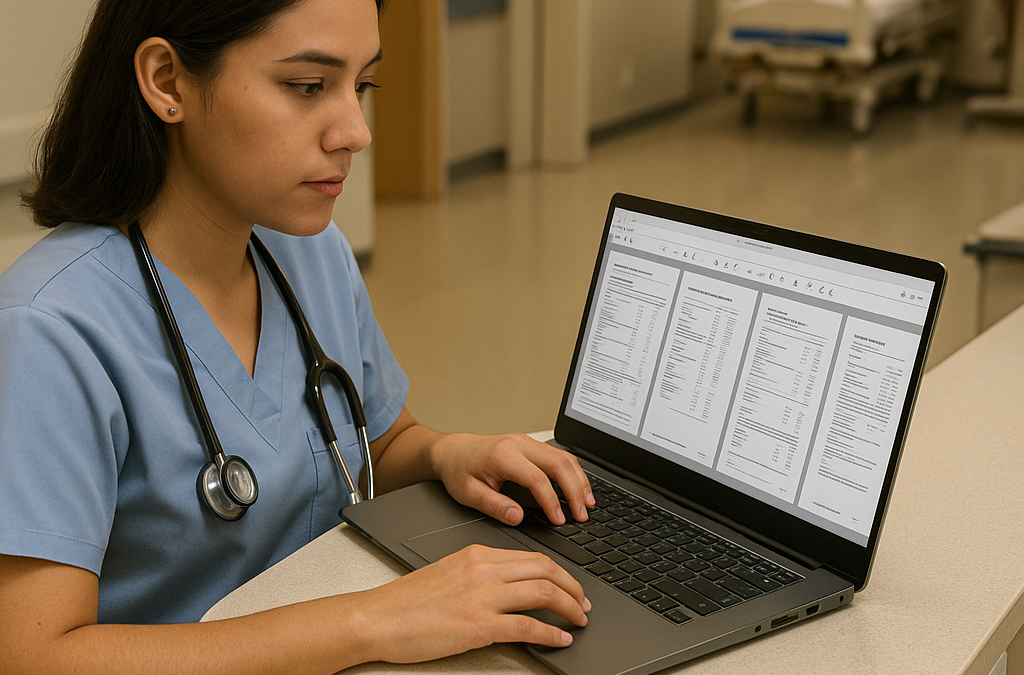

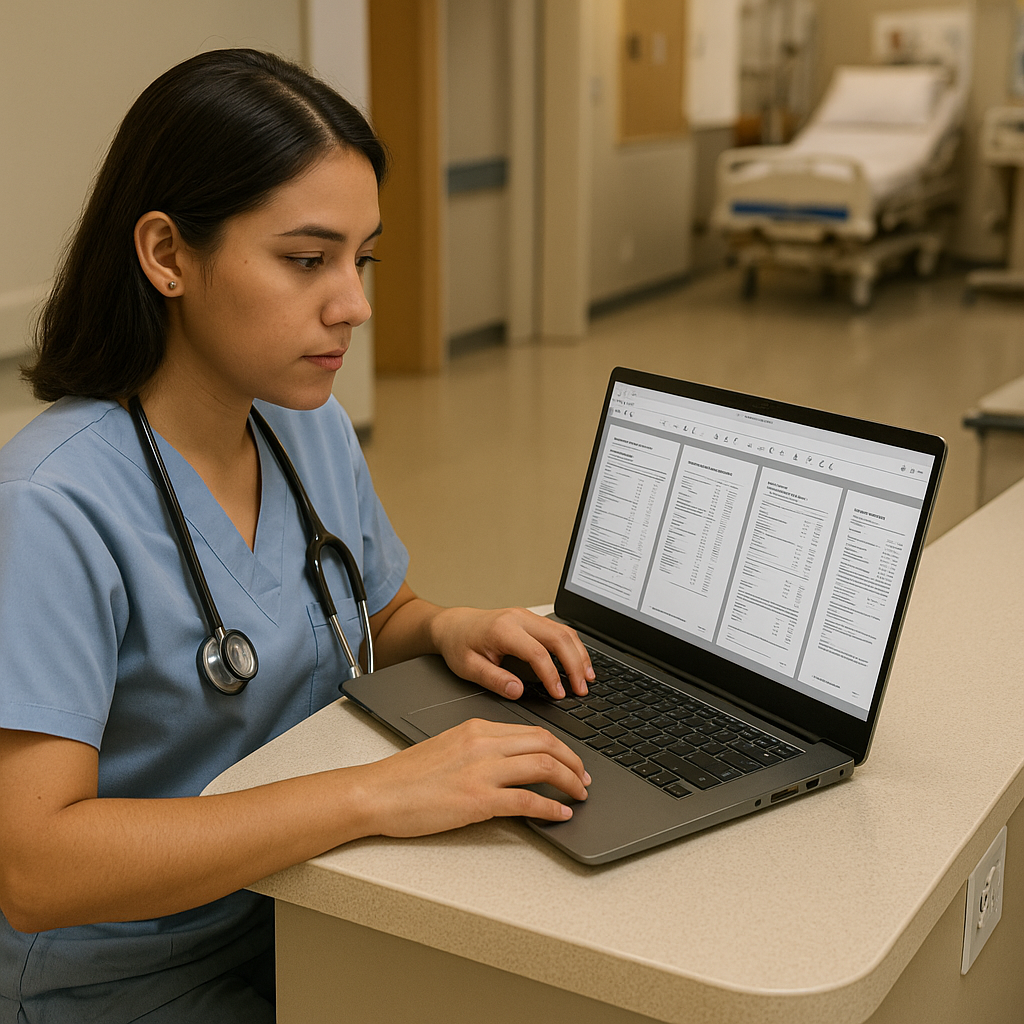
During her first clinical rotation at a teaching hospital in Phoenix, Hannah Torres, a junior nursing student at Arizona State University, discovered that caring for patients wasn’t just about bedside skills, medication checks, and vital signs. It was also about navigating a maze of digital paperwork.
On one particularly busy Wednesday, her clinical instructor assigned her a new patient: a middle‑aged man admitted for complications related to uncontrolled diabetes. Hannah’s task was simple on paper but tricky in practice: review all of his recent lab work and present a concise picture of what was happening.
Too Many Files, Not Enough Clarity
When Hannah logged into the hospital’s electronic health record system at the hallway workstation, she quickly found the lab tab. What she didn’t expect was how fragmented everything would be.
The patient had:
- Separate PDFs for each day’s complete metabolic panel
- Individual result files for HbA1c, fasting glucose, and lipid profiles
- A standalone PDF for a recent kidney function panel
- Scanned outside labs from a clinic visit two weeks earlier
Each file opened in its own window. Some were two pages, others four. The reference ranges looked slightly different depending on the lab that processed them. To get a full picture, she had to click back and forth between windows while scribbling numbers on a scrap sheet of paper.
She imagined explaining this to her instructor while awkwardly alt‑tabbing through half a dozen documents and felt her stomach tighten.
Wanting to See the Patient, Not Just the Pieces
During pre‑conference that morning, her instructor had emphasized:
“Don’t just memorize numbers. Tell me the story they’re pointing to.”
That was the problem. The labs had a story to tell—a worsening A1c, creeping creatinine, fluctuating blood glucose— but the story was scattered across multiple PDFs and dates. Hannah didn’t just need access to the information; she needed a way to see it in one place.
On her break, she sat at a quiet corner workstation, downloaded the relevant lab reports to a secured student folder on the hospital network, and decided she was done clicking in circles.
Bringing Everything Together in One Report
Hannah opened a browser and navigated to https://pdfmigo.com. She had used the site once for a pharmacology class to combine lecture notes, and she hoped it would work just as well for lab reports.
She uploaded the PDFs in chronological order: the outside clinic labs from two weeks ago, the admission labs from three days prior, and each day’s follow‑up panels. On screen, they appeared as a series of thumbnails—small, organized, and finally all in the same frame.
Hannah quickly dragged the pages into the order she wanted: earlier labs first, newer results last, with the key A1c and kidney function reports placed right after the basic panels. When the sequence told the story clearly, she selected the option to Merge PDF.
Seconds later, she had a single file: Torres_PatientLabSummary.pdf. One document. All labs. Clear timeline.
The Bedside Conversation That Landed
During rounds, her clinical instructor stopped at Hannah’s patient and asked, “So, what do his labs tell you?”
Instead of fumbling through multiple windows, Hannah opened her merged PDF. She walked them through the trend: how the A1c levels over the past months suggested chronically poor control, how the most recent creatinine and BUN pointed toward early kidney stress, and how the daily glucose readings since admission were reacting to the new insulin regimen.
Her instructor nodded, impressed—not just by the numbers she cited, but by how quickly she could reference them.
Later, Hannah used the same merged file to gently explain to the patient what the team was watching. She showed him how earlier labs compared to the current ones, highlighting the small improvements since admission. For the first time, he seemed to understand that the labs weren’t just “bad news”—they were a way to track progress.
Why This Matters for Nursing Students Everywhere
Hannah’s story is a small moment in a busy hospital, but it reflects a big shift in modern nursing education. Students are expected to:
- Navigate complex electronic records
- Interpret trends across multiple reports
- Communicate clearly with both instructors and patients
Yet the tools they’re given often break information into separate, disconnected pieces. Being able to combine related lab reports into a single, coherent document didn’t change the patient’s numbers, but it changed how clearly Hannah could see and explain them.
For a nursing student trying to grow into the role of a confident clinician, that kind of clarity is invaluable. Behind every smooth patient presentation, there’s a lot of quiet, unseen work—sometimes including something as simple as merging a few PDFs into one.
